US envoy signals Washington favors Damascus control of Suwayda
Tom Barrack's comments suggest a split with Israel over the Druze-majority governorate, where a 2025 trilateral agreement remains unfulfilled.
By Ricardo Alvarez ·
US special envoy Tom Barrack indicated on Friday that Washington prefers the Syrian government retain control over the southern governorate of Suwayda, rather than allowing a Druze faction linked to Israel to manage the region. The comments, made during an interview with Australian social media personality Mario Nawfal, mark a clear divergence between American and Israeli strategies regarding Syria's future.
Barrack, who also serves as the US ambassador to Turkiye, referred to a specific Druze sheikh during the conversation. He did not name the figure, but observers identified him as Hikmat al-Hijri, a leading religious and political authority in Suwayda. The National Guard, an armed group associated with al-Hijri, has faced accusations of receiving Israeli support and pursuing separatist goals.
The statement lands at a time of heightened tension. Since the fall of President Bashar al-Assad in December 2024, Israel has maintained a strong military presence in southern Syria. Israeli forces have seized land in Quneitra governorate, bombed the Syrian Ministry of Defence, and intervened in local conflicts. The new Syrian leader, Ahmed al-Sharaa, has worked to build a relationship with US President Donald Trump, who views stability in Syria as essential for reconstruction after 13 years of war.
Navvar Saban, a researcher in security and military affairs at the Arab Center for Contemporary Syrian Studies, described Barrack's message as unambiguous. "Israel backing [al-Hijri] does not equal American backing," Saban said. "Washington has prioritised an agreement with Damascus while Israel retains its own security demands and relationship." This distinction highlights a strategic split, as Prime Minister Benjamin Netanyahu has taken a harder line against the new Syrian government than Trump has.
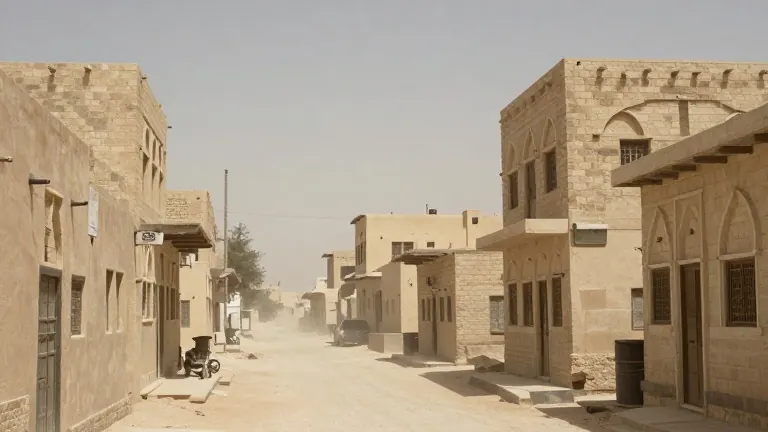
Suwayda, a majority Druze region, remains one of the last areas where the central government lacks full authority. Local residents rose up against the former regime in 2023 and maintained protests until the government collapsed in late 2024. However, trust in the new administration fractured in July 2025 when sectarian fighting between Bedouin tribes and Druze communities resulted in heavy casualties among the Druze. Israel intervened in that conflict, attacking what it described as Syrian government forces entering the province.
Nanar Hawach, a Syrian analyst who visited Suwayda in September, noted that the US is building a partnership in Damascus, while Israel appears to prefer a weaker central government. "Washington is building a partner in Damascus while Israel appears to prefer a Damascus that is too weak to assert itself in the south," Hawach said. He added that Israel uses Suwayda as a lever to maintain a military presence along the borders of Quneitra and Daraa.
The diplomatic situation is complicated by a trilateral agreement signed in Amman, Jordan, in September 2025. The accord, negotiated with US and Jordanian involvement, called for an independent international commission to investigate the July 2025 violence and ensure perpetrators were held accountable. Despite this framework, the region remains in a deadlock, with many residents harboring deep distrust of the central government in Damascus.
Hawach observed that al-Hijri's influence grows whenever the Druze community feels threatened, but that pressure from Damascus often strengthens the very leadership it seeks to weaken. "Each side points to the other’s hard line to justify its own," Hawach said. This dynamic keeps the province's future defined by security concerns rather than political negotiation.
Saban emphasized that a lasting solution requires credible accountability for the events of 2025. "The Druze need to be guaranteed protection of movement, education and security," he said. Neither weakening al-Hijri nor simply restoring government institutions will rebuild trust, according to Saban. The central government stands a better chance of winning over residents by addressing their daily needs and pursuing justice for the sectarian killings.
Barrack's remarks add to the diplomatic pressure on both Damascus and the Druze leadership. While the US supports the new Syrian government's authority, it must manage Israel's continued military activities in the south. The outcome of the independent commission's investigation will be a key test for whether the trilateral agreement can move Suwayda from a state of stasis toward a stable integration with the rest of Syria.
Source: Al Jazeera