Suffolk County voters helped flip Senate as Democrats take 54 seats
Local polls closed at 8 p.m. Tuesday as the national count showed Democrats gaining at least seven Senate seats, leaving Massachusetts with a Democratic trifecta and a new national leadership contest.
By Tessa Cooper ·
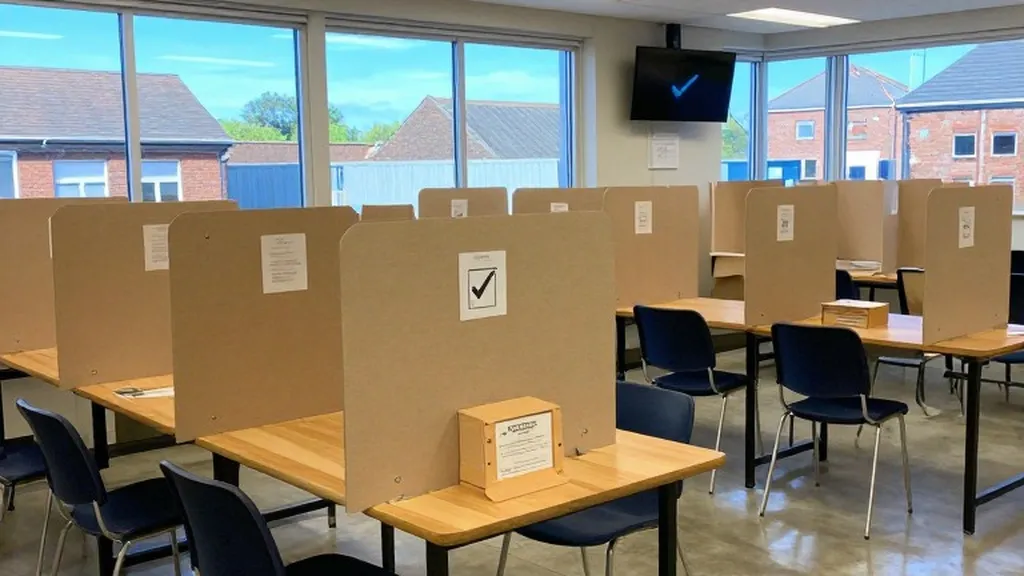
Voters across Suffolk County cast their ballots Tuesday between 7 a.m. and 8 p.m. at local polling places in Boston, Cambridge, Lynn, Quincy, Newton, and Somerville. The county participated in a statewide general election that included races for U.S. Senator, Governor, all U.S. House seats, state legislative offices, and local municipal positions. Incumbent Democratic U.S. Senator Edward J. Markey ran for reelection in the state, while incumbent Democratic Governor Maura Healey also appeared on the ballot for a new term. These races were part of a broader national midterm election that determined the balance of power in the U.S. Senate and House of Representatives for the next two years.
The national results confirmed a significant shift in the U.S. Senate, where Democrats won at least seven seats previously held by Republicans. As of the latest reporting, Democrats hold a 54-44 majority in the 100-seat chamber. This outcome places the 2026 election in the top 20% of historical midterm elections in terms of seat swings against the president’s party. The Republican Party suffered a net loss of at least seven Senate seats, a result that has prompted internal discussions about future strategy and leadership. Two additional Senate races in Alaska and Mississippi remained uncalled at the time of reporting, but the overall majority for Democrats was secure.
In Massachusetts, the election results align with the national trend of Democratic gains. The state retained its Democratic trifecta, with control of the governor’s office and both chambers of the state legislature remaining with the Democratic Party. This stability provides a consistent policy environment for Suffolk County towns, which rely on state funding for infrastructure, education, and public safety. The county’s participation in these races was high, reflecting the local importance of the state’s federal representation and its own executive leadership.
The shift in Senate power has immediate implications for the chamber’s leadership. Democratic Senator Bernie Sanders of Vermont announced he would not support incumbent Democratic Leader Chuck Schumer for reappointment as party leader. Sanders, an Independent who caucuses with Democrats, cited the need for a new generation of leadership and a vigorous debate about the party’s direction. He was joined by incoming Democratic Senator Elissa Slotkin of Michigan, who stated she is not actively seeking the job herself but wants to see potential leaders present a full plan for the new majority. Slotkin described her stance as a no until she sees a comprehensive plan from any candidate.
Several incoming Democratic senators have echoed the call for change, signaling support for alternative candidates over Schumer. Progressive members of the party, including Michigan Senator-elect Abdul El-Sayed, have pushed for Maryland Senator Chris Van Hollen as a potential contender. Van Hollen, who has previously considered a presidential run in 2028, is now weighing a bid for Senate leader. He noted that he is currently calling colleagues to gauge support. Schumer, 75, has shown few signs of stepping aside and expressed confidence in his position, stating that the focus must be on getting things done in the year ahead.
Meanwhile, Senate Republicans reelected South Dakota Senator John Thune as leader of the GOP conference after a tense day of discussions. Thune ran unopposed in the secret ballot election, but the meeting was marked by frustration over the election losses. Wisconsin Senator Ron Johnson had pushed to postpone the leadership decision to allow for more reflection, but the conference voted to proceed. Johnson walked out of the room as voting began. West Virginia Senator Jim Justice noted that while the current leadership did not cause the losses, there was a legitimate argument for change given the scope of the defeat.
Missouri Senator Josh Hawley criticized the decision to ratify the same leadership so quickly after losing at least seven Senate seats. He described the discussion as a frank and honest open microphone meeting where senators shared their views on the election results. Hawley emphasized the need to change course rather than simply continuing with the same approach. Florida Senator Rick Scott urged the leadership to stay in session around the clock in the coming weeks to push through war spending and other party priorities before Democrats fully take control of the chamber's agenda.
The election also resulted in a Democratic majority in the U.S. House, with Democrats picking up at least 43 seats. This gives them a 250-157 majority in the 435-seat chamber. The party’s gains included surprising victories in deep red districts, such as North Carolina’s 9th district, where Democrat Richard Ojeda defeated seven-term Republican Representative Richard Hudson. In Texas, Democrat Katy Padilla Stout won the 23rd district by eight points, ending a Republican hold on the seat since 2012. These upsets indicate a broad shift in voter sentiment across the country.
House Republicans selected Ohio Representative Jim Jordan as their new minority leader. Jordan defeated Louisiana Representative Steve Scalise in a secret ballot vote of 106-73. Jordan, a co-founder of the House Freedom Caucus, emphasized his experience in committee oversight and his readiness to challenge the new Democratic majority. He stated that the Republican job is to focus on offense rather than defense to win back power in the 2028 elections. Scalise, who had raised significant funds for the midterms, conceded defeat, noting that his fundraising efforts helped support the party’s campaigns.
Statewide in Massachusetts, the election included a ballot measure known as Question 1, which sought to make records held by the state legislature and the governor’s office public records. The measure was listed on the ballot alongside other state and local offices. While specific vote counts for the measure were not yet finalized in the initial reporting, the election process in Suffolk County proceeded without major reported disruptions. The towns of Boston, Cambridge, Lynn, Quincy, Newton, and Somerville all held their polls open for the full duration, allowing residents to participate in the selection of their federal and state representatives.