Latinos in U.S. reach 70.1 million as media leaders debate information sources
Panelists at a Harvard Club of Boston event discussed the economic growth of the Latino community and the rise of social media as a primary news source.
By Tessa Cooper ·
The Latino population in the United States reached 70.1 million by July 1, 2025. This group now represents 21 percent of the national population. The United States has become the second country in the world with the most Spanish speakers, trailing only Mexico.
The demographic shift occurred alongside economic expansion. The Latino gross domestic product hit $4.4 trillion in 2024. That figure surpassed the economic output of Japan for the first time. If Latinos were a sovereign nation, they would hold the fourth-largest economy globally.
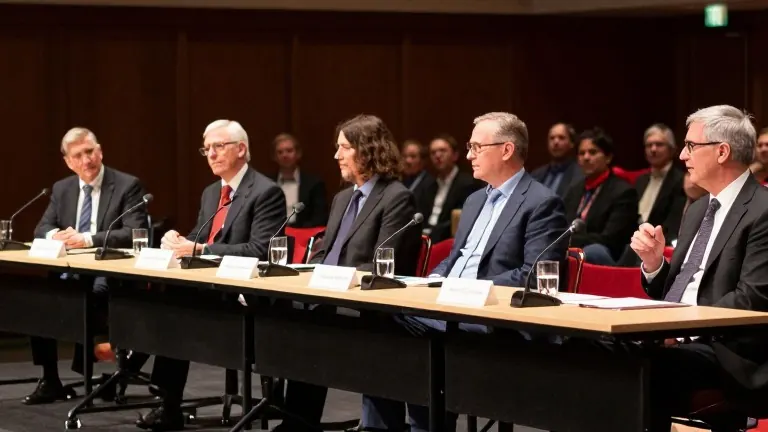
Media executives and journalists gathered at the Harvard Club of Boston on October 21 to discuss these changes. The event, titled America Speaks Spanish, was organized by Conexión and El Planeta. Sponsors included the Harvard Club of Boston, Eastern Bank Foundation, and TQM Wealth.
Jazmine Ulloa, a national reporter for The New York Times, opened the discussion on historical context. She argued that the U.S.-Mexico border history deserves the same recognition as Ellis Island. Ulloa noted that El Paso and Ciudad Juárez functioned as a single city for decades. She described the region as Indigenous land before it became Spanish, then Mexican, and finally American territory.
Ulloa stated that understanding this history is key to current migratory debates. She emphasized that her editorial team treated the story of El Paso as a central American narrative, not just a Latino one. Javier Marín, founder of Tiempo Company, agreed on the importance of roots. He cited the 1848 Treaty of Guadalupe Hidalgo as the starting point for both his book and Ulloa's work.
The conversation then turned to the evolution of Spanish-language media. Marín traced the lineage of Spanish broadcasting from the Spanish International Network to Univision. He noted that major newspapers launched Spanish editions such as El Nuevo Herald in Miami and Hoy in Chicago. However, these print operations were often the first to close during industry crises.
Marcela García, a columnist for The Boston Globe, identified a shift in where Latinos get their news. She reported that TikTok has become the top source of information for many Spanish speakers in the last four years. García warned that fake accounts using artificial intelligence now pose as immigration lawyers on the platform. These bots provide incorrect legal advice and charge for consultations.
Panelists acknowledged that influencers have gained trust through consistent and authentic communication. Marín calculated that 38 percent of U.S. Hispanics rely on Spanish as their primary language. He noted that the lack of strong Spanish newsrooms has allowed social media creators to fill the void. Many established media outlets, he said, treat Latin partners as secondary.
Julio Varela, founder of The Latino Newsletter, argued that trust requires long-term presence. He rejected the idea of short-term media initiatives. Varela said that corporations often measure success over short periods and abandon projects quickly. He pointed to the closure of Spanish opinion sections at The New York Times and The Washington Post as examples.
The panel discussed the unpredictability of the Latino vote. Ulloa explained that the varied information sources of Latino voters make it difficult to predict their choices based on television exposure alone. Varela advised stopping the treatment of Latinos as a single voting block. He urged media to view them as American voters with diverse backgrounds.
Source: El Planeta · original report published