Young Republicans Seek House Seats as Gen Z Cohort Grows
Joe Mitchell and others aim to expand Gen Z representation in Congress this Tuesday, though few have the odds in their favor.
By Zoe Harrison ·
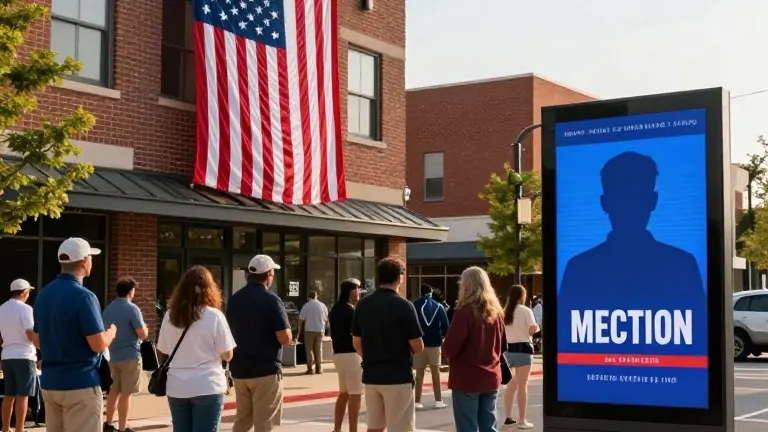
Voters in northeast Iowa face a choice on Tuesday between Joe Mitchell and a Democratic opponent in the second congressional district. Mitchell, 29, seeks to become part of the first group of Gen Z Republicans to serve in the House. His bid is one of the few competitive races where the outcome remains uncertain, as national polls show growing dissatisfaction with President Trump among voters.
Mitchell holds the endorsement of President Trump. If elected, he will join a small new class of young lawmakers. Other Gen Z Republicans are running this fall, but most face steep odds. One candidate contests a reliably red district, while the others challenge incumbents in safe blue seats. Mitchell told reporters that voters in Iowa express a desire for younger leadership regardless of party affiliation. He noted that he hears this sentiment during every campaign stop.
The former state senator and real estate developer proposes an anti-corruption platform. He supports term limits capping House service at six terms and a ban on congressional stock trading. Mitchell has also rejected campaign donations from corporate PACs. He links these positions to the economic concerns of Americans under 30. He stated that young people are frustrated with the current system and that they have valid reasons for that frustration.
Currently, only one Gen Z member serves in the House. Maxwell Frost, a 29-year-old Democrat from Florida, holds that seat. Two additional candidates are projected to win on Tuesday. Melat Kiros, 29, is favored in Colorado's 1st district. Michael Alfonso, 26, is expected to carry Wisconsin's 7th district. Alfonso is married to the daughter of Transportation Secretary Sean Duffy. If elected, Alfonso would be the first person born in the 2000s to serve in Congress.
Alfonso described his age as a major advantage in an interview with Wisconsin Public Radio. He said he shares the values of hard work, faith, and family with residents of the 7th district. Despite these optimistic views, Gen Z candidates remain a small fraction of the field. Future Caucus data shows that only 4% of congressional candidates nationwide this cycle are Gen Z. That generation had the lowest success rate in primaries compared to other age groups.
Young Republicans constitute an even smaller slice of the candidate pool. A majority of Gen Z candidates this year ran as Democrats, while fewer than one-third filed as Republicans. Adam Pennings, executive director of Run Gen Z, said the organization works to build a bench of young conservatives. His group announced endorsements for more than 220 Gen Z and millennial conservatives in late October. This list includes longshots like Riley Owen, a 28-year-old Republican running in Utah's 1st district, which heavily favors Democrats. Owen said voters are hungry for new faces and fresh ideas.
Mitchell argues that the Republican Party should define itself as an America First party. He believes younger candidates will push this agenda, a view he says aligns with Vice President JD Vance. The definition of America First has caused friction within the GOP over the U.S. war with Iran. Mitchell has not opposed the war but cautioned against endless conflicts. He stated that people can interpret the term in different ways, though he believes Trump's agenda fits his definition.