Coleman faces Pinsley in Pennsylvania Senate rematch
The Republican incumbent and Democratic challenger trade blows over transparency and data centers as voters head to the polls Tuesday.
By Zoe Harrison ·
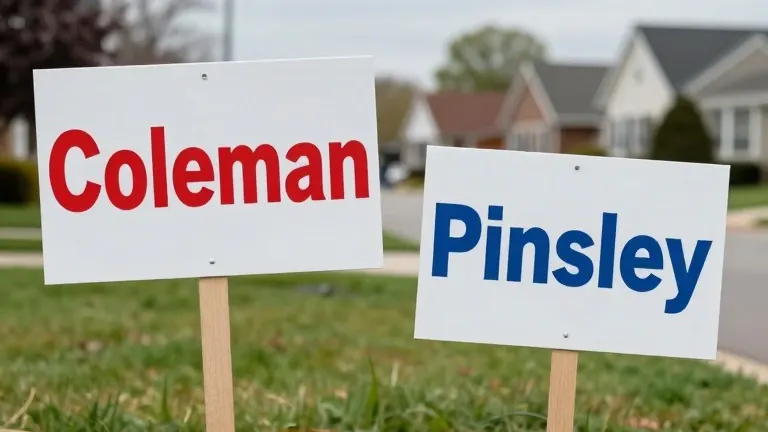
Jarrett Coleman and Mark Pinsley will face off in a Pennsylvania Senate race on Tuesday, marking a rematch of a contest they decided by a margin of approximately 10,000 votes in 2022. Coleman, a Republican and professional pilot, is seeking a second term representing parts of Allentown, its suburbs, and Upper Bucks. Pinsley, the Democratic Lehigh County Controller, is challenging the incumbent again after serving in that local role for seven years.
The candidates’ platforms diverge sharply on economic policy and the size of government. Coleman has championed free-market principles and transparency, while Pinsley has aligned himself with organized labor and progressive economic proposals. Their debate has centered on whether state intervention or local control better serves constituents, particularly regarding cost of living and public services.
A key legislative win for Coleman occurred in late October when Governor Josh Shapiro signed a bill coauthored by Coleman and Pat Stefano. The legislation closes a loophole in the state’s Sunshine Act, requiring localities to provide 24 hours’ notice before enacting consequential policy. Coleman argued that this measure ensures voters receive necessary information to judge whether public programs deliver on their promises.
Coleman’s push for transparency stems from his legal battle with the Parkland School Board. He successfully sued the board for approving a teacher contract without proper public notice, a victory initially affirmed by the Commonwealth Court. However, the Pennsylvania Supreme Court reversed that decision last November. Coleman cited the dissent in that ruling as a blueprint for the bipartisan support he secured for his new notice bill in the state legislature.
Pinsley acknowledged the value of transparency legislation but questioned its scope. He suggested that Coleman’s focus often aligns with the interests of major donors, including Jeff Yass, a Philadelphia-area trading firm principal. Pinsley stated that while he supports increasing transparency, he believes Coleman’s efforts are narrowly focused on groups that contribute to his campaigns.
The race has intensified as both candidates address the rapid growth of data centers in the region. Constituents have expressed concern over noise pollution and rising utility costs. Pinsley noted that PPL Electric Utilities attributed a 55 percent regional price spike over the last four years to grid hardening for data centers. He has proposed a statewide pause on new construction and legislation requiring technology companies to fully cover their electricity needs.
Coleman has taken a different approach, focusing on local control. He supports repealing a state tax break for data centers and empowering municipalities to adopt moratoria on development. He argued that while some projects are unpopular, others have strong local support, and communities should have the final say. His moratorium measure received bipartisan committee backing in July.
Endorsements have reflected the ideological split between the two candidates. The Philadelphia Federation of Teachers called Pinsley a vote for public education funding, while Bernie Sanders and Ro Khanna have backed his candidacy. In contrast, Americans for Prosperity-Pennsylvania labeled Coleman a policy champion, with director Emily Brey urging voters to keep him in Harrisburg to limit government overreach.
Both candidates have prioritized affordability in their messaging. Coleman cited an electricity tax cut and housing regulatory reforms as key steps to lower costs. Pinsley has proposed raising the minimum wage from $7.25 to $22 per hour and capping out-of-pocket costs for insulin and other drugs. He also highlighted county-level savings of about $3 million achieved by ending overcharges from pharmacy benefit managers.
The election is expected to be closely watched as a bellwether for state legislative races. Coleman emphasized his desire to devolve decision-making power from the state capital to localities, particularly in education. He stated that his goal is to continue advocating for constituents on issues like cost of living and the right to know, while ensuring communities have a voice in local development projects.