UT San Antonio Builds Moon Simulator to Test Icy Soil for Artemis
A $1 million NASA grant funds a new laboratory that replicates the extreme cold of the lunar poles to determine how crews can mine water ice from the regolith.
By Ricardo Alvarez ·
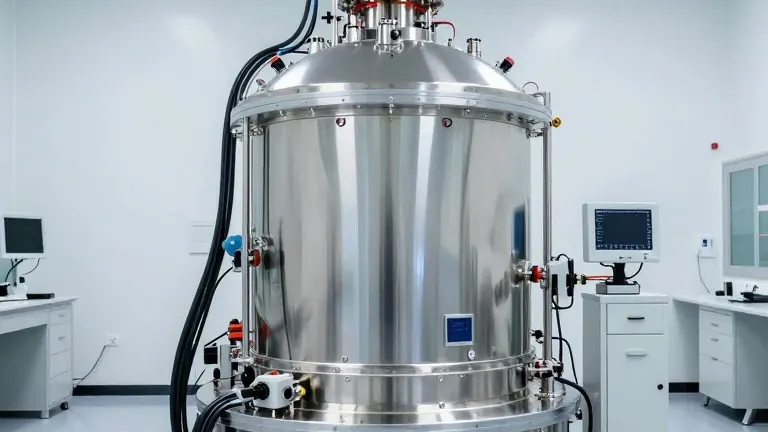
UT San Antonio will construct a specialized chamber this month to replicate the frigid environment of the Moon’s permanently shadowed regions. The facility, known as the Multi-Planetary Surface Simulator, will allow researchers to test how water ice behaves when mixed with lunar soil. This work aims to solve a key engineering hurdle for future human missions to the Moon.
NASA awarded the university $1 million over two years to lead the project. The funding comes from the MUREP Space Technology Artemis Research program, which supports research at minority-serving institutions. NASA selected only 12 universities across the country for this specific grant.
The simulator will be housed in the Laboratory for Experimental and Aqueous Planetology on the UT San Antonio campus. The machine will control temperature, pressure, atmospheric composition, humidity, and radiation to mimic conditions found on the Moon and other planetary bodies. These controls allow scientists to observe how materials react over time in extreme environments.
Kaushik Mitra, an assistant professor of Earth and Planetary Sciences, serves as the project’s principal investigator. He stated that understanding the interaction between water ice and lunar soil is fundamental to building scalable resource utilization systems. The team plans to generate physical and electrochemical data that NASA and industry partners need to extract surface resources.
The research focuses on the lunar South Pole, where the Artemis mission plans to establish a permanent base. Evidence suggests that water ice exists in the craters at this location. Alan Whittington, a professor of Earth and Planetary Sciences, noted that the ice is mixed with regolith, which may become difficult to excavate. His team will use a facility called the HAMSTER lab to measure how the hardness and scoopability of the soil changes with different ice content.
Four distinct laboratories at UT San Antonio will contribute to the project. Mitra’s group will lead planetary simulation and excavation testing. Whittington’s team will perform low-temperature rheology and compaction testing. Xinting Yu, an assistant professor of Physics and Astronomy, will study the mechanical properties of individual grains. Shrihari Sankarasubramanian, an assistant professor of Biomedical and Chemical Engineering, will develop sensors capable of surviving the extreme cold.
Sankarasubramanian said the team will use the simulator to mimic conditions on various extraterrestrial bodies. They will also develop custom instruments to measure chemical properties of the icy regolith. Additional collaborators include Ana Stevanovic from the Kleberg Advanced Microscopy Center and Wendell Griffith from the Department of Chemistry.
The project includes a workforce development component designed to train the next generation of space researchers. Each summer, the grant will fund three UT San Antonio students for 10 weeks of research at NASA centers. These internships will take place at the Jet Propulsion Laboratory, the Johnson Space Center, and the Goddard Space Flight Center.
Matt Cannon, an associate professor of instruction, will help select the students for these NASA positions in November and December. They will begin their paid internships in Spring 2027. On campus, the project will support four undergraduate researchers per semester, one master’s student in geosciences for two years, and one postdoctoral researcher.
The team will also fund paid summer research opportunities for local students. Each year, four students from St. Philip’s College and San Antonio College will participate. Two high school students from Southwest Independent School District will also receive funding. Kelly Miller and Ryan Blase from the Southwest Research Institute serve as co-investigators on the project.