Suffolk County voters: Polls open 7 a.m. To 8 p.m., ID rules vary
Massachusetts polls open at 7 a.m. And close at 8 p.m., with voters in Boston and other towns deciding on Markey, Healey, and key ballot measures.
By Tessa Cooper ·
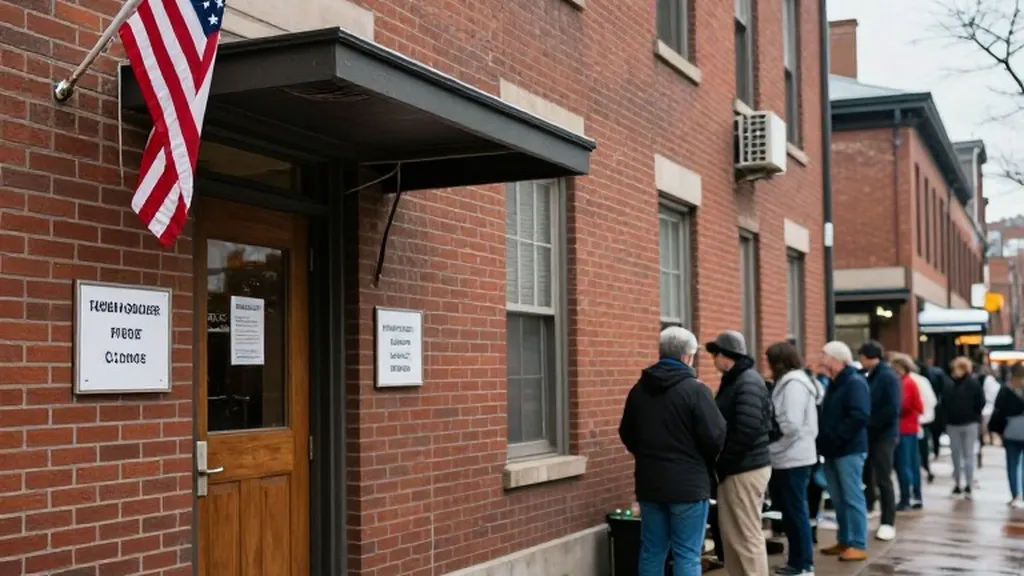
Voters across Suffolk County, including residents of Boston, Cambridge, Lynn, Quincy, Newton, and Somerville, began casting their ballots at 7 a.m. On Tuesday, November 3, 2026. Massachusetts polling places are open until 8 p.m. Local time, though some municipalities may open as early as 5:45 a.m. Anyone standing in line when the polls close is entitled to vote, a provision that may affect wait times in high-traffic precincts throughout the county.
Before heading to the polls, voters are advised to verify their specific location at vote.gov or through their local election office. While Massachusetts does not require voters to present identification at the polling place, ID rules vary significantly by state, and voters traveling or splitting their time between states should check local regulations. For those voting in person, the ballot includes the U.S. Senate seat held by incumbent Edward J. Markey, the governor’s office held by Maura Healey, and every U.S. House seat in the state.
Statewide, Massachusetts voters are also deciding on nine ballot measures that range from public records access to labor rights for committee employees. Question 1 seeks to make records held by the state legislature and the governor’s office public records, while Question 4 would provide for same-day voter registration. Other measures address the creation of a Nature for All Fund, the repeal of recreational marijuana laws, and the requirement for cities and towns to allow single-family homes on residentially zoned lots that meet minimum area standards.
Nationally, the midterm election determines who controls Congress for the final two years of President Donald Trump’s second term. All 435 U.S. House seats are up for grabs, with Republicans currently holding 218 seats and Democrats holding 214. Democrats need a net gain of three districts to secure a majority, while Republicans can afford to lose no more than two seats. Thirty-five of the 100 U.S. Senate seats are also on the ballot, including 33 regular elections and two special elections.
The Associated Press describes the election as a referendum on the president’s second term, with many voters expressing frustration over high prices and the unpopular war with Iran. AP-NORC polling indicates that only 35% of U.S. Adults approve of Trump’s job performance, while about seven in 10 say the country is heading in the wrong direction. More than 57 million people had already voted by Monday, surpassing the early vote totals of four years ago in many closely watched states.
Logistics for mail-in ballots have drawn attention from the U.S. Postal Service, which has added extra hours, staff, and special lines to ensure that mail ballots are counted on time. This measure is particularly critical in states that rely heavily on mail voting, such as California, Colorado, and Hawaii. In Massachusetts, while in-person voting is the primary method, the Postal Service’s enhancements provide a backup for any postmarked ballots that may need processing.
In the Senate, thirteen races are considered battlegrounds, including Maine, which is rated a toss-up by all four major election analysts. In Maine, incumbent Republican Senator Susan Collins faces Democratic former state Senate President Troy Jackson, with the Associated Press noting that economic strain and tariffs have made the state competitive. Other key matchups include Georgia, where Senator Jon Ossoff faces Representative Mike Collins, and Michigan, where former Representative Mike Rogers competes against Abdul El-Sayed.
Governor races are also pivotal, with 36 governorships on the ballot. Republicans hold 26 governor’s offices and Democrats hold 24. In Massachusetts, incumbent Governor Maura Healey is running for re-election. Nationally, Democrats would need a net gain of two governorships to achieve a nationwide majority, a feat they have not accomplished since 2010. Competitive governor races include those in Georgia, Nevada, and Ohio, where candidates are vying to succeed term-limited or retired incumbents.
The financial aspect of the 2026 elections is expected to be the most expensive in history, with Republican committees outraising and outspending their Democratic counterparts. This is partly due to support from Trump-affiliated groups and Elon Musk. However, at the candidate level, Democrats have outraised their opponents. 88.1% of Republican general election TV ad spending went to states and districts that Trump won in 2024, indicating a strong focus on defending the president’s base.
Voters in Suffolk County should be prepared for potential lines, as the Associated Press notes that turnout is a critical factor in determining the outcome. RNC Chairman Joe Gruters stated that everything depends on turnout, while DCCC Chair Suzan DelBene emphasized that the American people are angry and want change. As polls remain open until 8 p.m., local officials in Suffolk County are monitoring conditions to ensure a smooth voting process for all residents.
The results of this election will have significant implications for the balance of power in Washington, with control of Congress potentially influencing investigations, impeachment proceedings, and the legislative agenda for the next two years. House Democratic Leader Hakeem Jeffries has outlined a 100-day agenda focused on the cost of living and oversight, which would take effect if Democrats win the House. For now, the focus remains on the voting process itself, with millions of Americans exercising their right to shape the future of their government.