Suffolk County voters join national Democratic wave in 2026 midterms
Massachusetts residents voted in a historic sweep that handed Democrats control of Congress and reshaped state power.
By Zoe Harrison ·

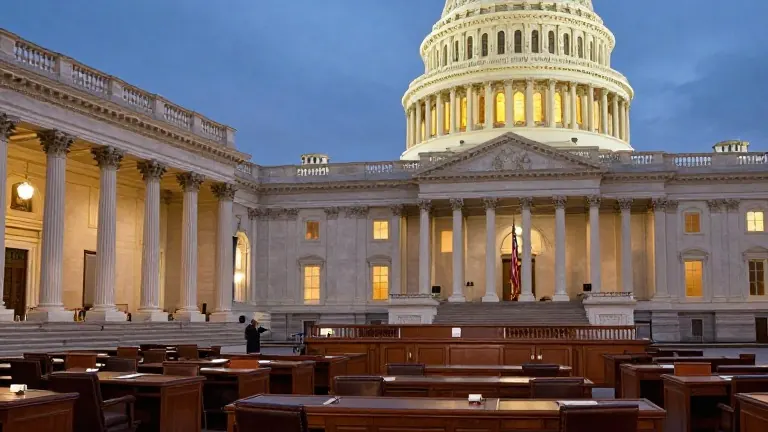
Suffolk County voters joined a nationwide surge on Tuesday, November 3, 2026, that delivered a decisive victory to the Democratic Party and shifted the balance of power in Washington and state capitals across the country. The Associated Press reported that Democrats won control of both the U.S. House of Representatives and the U.S. Senate, ending a period of unified Republican control in the federal government. In Massachusetts, polls were open from 7 a.m. To 8 p.m., with some municipalities opening as early as 5:45 a.m., allowing residents of Boston, Cambridge, Lynn, Quincy, Newton, and Somerville to participate in the general election for federal, state, and local offices.
The election results marked a significant rebuke of President Donald Trump's party, with voters expressing dissatisfaction over the economy, high gas prices, and the war in Iran. Ballotpedia noted that Democrats gained control of the U.S. Senate, where they had previously held a 47-47 balance including independents, while Republicans had held a 53-47 majority. In the U.S. House, Democrats won 233 seats compared to 138 for Republicans, securing a substantial majority that will allow them to set the legislative agenda for the next two years. This outcome sets the stage for a divided government, with Congress poised to challenge the White House on key policy issues.
At the state level, Massachusetts voters elected incumbent Governor Maura Healey and incumbent U.S. Senator Edward J. Markey, as indicated by the state's ballot structure and the broader national trend of Democratic gains. The Associated Press highlighted that Democrats won or retained full control of both chambers of the legislatures in several battleground states, including Michigan, Minnesota, and Pennsylvania. This success reflects a broader pattern of Democratic victories in state governments, with the party taking full control in at least five states where they previously shared power. The wins put pressure on Democratic leaders to address voter concerns about the cost of living, housing affordability, and healthcare access.
For Suffolk County residents, the national wave underscores the impact of local voting patterns on broader political trends. The Associated Press analysis showed that the Democratic surge was fueled by voter dissatisfaction with the administration's handling of the economy and foreign policy. In the state, voters also considered several ballot measures, including questions on public records, labor practices, and voter registration. The results of these measures will influence how the state government operates in the coming years, with potential changes to how records are handled and how elections are conducted.
The Republican Party's redistricting efforts, which were aimed at gaining an advantage in the midterm elections, ultimately fell flat. Democrats won most of the seats they targeted in states like Texas, Florida, and Alabama, while Republicans lost control of key districts in other areas. This failure to maintain a congressional majority has led to calls within the Republican Party to reassess its strategy and identity. The Democratic Party, meanwhile, is focusing on delivering immediate results to address the economic challenges facing American families.
In the U.S. Senate, Democrats gained seven seats, changing the partisan control in states such as Iowa, Kansas, Maine, North Carolina, Ohio, South Carolina, and Texas. The Associated Press noted that these victories included historic firsts, such as the election of the first Muslim to the Senate in Michigan and the first Black woman governor in Georgia. The new Senate majority will have significant implications for judicial appointments and legislative priorities, as Democrats seek to reverse policies enacted during the previous Republican-controlled Congress.
The House of Representatives saw a net gain of 30 seats for Democrats, as the party capitalized on voter discontent and effective campaigning. The Associated Press reported that the new House leadership, including Hakeem Jeffries of New York, pledged to focus on lowering the costs of gas, groceries, and other essentials. The party also announced plans to launch a robust oversight agenda to hold the executive branch accountable, with potential investigations into the administration's handling of key issues.
For Suffolk County, the election results reflect the broader political landscape in Massachusetts, where the Democratic Party has maintained a strong presence. The state's voters have consistently supported candidates who prioritize economic stability and social progress, and the 2026 midterms reinforce that trend. The Associated Press noted that the election served as a referendum on President Trump's second term, with voters in the state and nationwide expressing their views on the direction of the country.
The new Congress will be sworn in on January 3, 2027, marking the beginning of a new era in American politics. The Democratic majority in both chambers will have the opportunity to shape the legislative agenda, with a focus on addressing the cost of living, expanding healthcare access, and investing in infrastructure. The party's success in the 2026 midterms provides a mandate for change, but also sets high expectations for delivering results to the American people.
In the coming months, the new Congress will face the challenge of working with a divided government to pass legislation that addresses the concerns of voters. The Associated Press noted that the Democratic Party's victories were driven by a combination of effective campaigning, voter turnout, and a clear message about the need for change. For Suffolk County residents, the results of the 2026 midterms will influence the policies that affect their daily lives, from healthcare to education to economic opportunities.