Joseph Kabila Takes Command of Rebel Front Seeking to Topple Tshisekedi
The former DR Congo president, now 55, was named leader of the Front for the Refoundation of the Nation earlier this month after being sentenced to death in absentia.
By Ricardo Alvarez ·
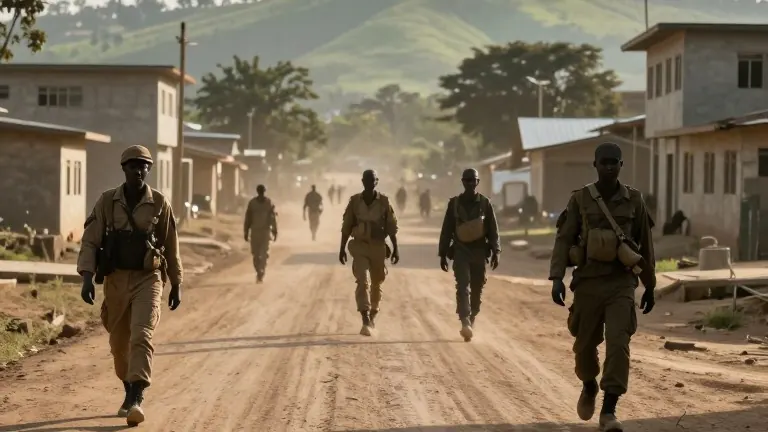
Joseph Kabila, who led the Democratic Republic of Congo for 18 years, was named earlier this month to head the Front for the Refoundation of the Nation (FRN), a rebel alliance that includes the M23 movement. The M23 seized Goma and Bukavu, the main cities of eastern DR Congo, last year. Kabila, 55, served as a commander in the rebel alliance that brought his father, Laurent Kabila, to power in 1997 and assumed the presidency after his father was assassinated in 2001.
The appointment places Kabila in opposition to President Felix Tshisekedi, the man Kabila handed power to in January 2019 after a disputed 2018 election. Kabila and Tshisekedi governed together under a power-sharing arrangement until December 2020, when Tshisekedi moved to break Kabila's control of parliament. Kabila then left for self-imposed exile in South Africa. He returned to DR Congo in 2025 and appeared in rebel-held Goma. In September 2025, a military court sentenced him to death in absentia on charges including treason and financing violence in eastern Congo. Kabila rejected those accusations.
Policy analyst Henry-Pacifique Mayala told the BBC that Kabila had limited routes back to political influence. "He actually was left with no other choice," Mayala said, adding that Kabila would not have joined the alliance without guarantees. Richard Moncrieff, a Great Lakes analyst with the International Crisis Group, said Tshisekedi holds the stronger hand. "Tshisekedi has strong American backing. He has a lot of money. And he generally controls the political system and, as far as we can see, the military system," Moncrieff said.
Kabila has framed his break with Tshisekedi as a constitutional matter. Speaking to Conspiracy Trackers Great Lakes, a research group that campaigns against disinformation in the region, he invoked Section 64 of the constitution, which calls on citizens to resist anyone who takes power in violation of constitutional provisions. He also accused the government of reinstating the death penalty to intimidate civilians, politicians and military personnel. "This is personal," he said. Tshisekedi said of Kabila last week: "In my view, it's simply proof that he has never loved this country, and even less its inhabitants."
The C64 coalition of opposition parties, named after that same constitutional section, declined to back Kabila's rebellion this week. The coalition said Congo's security crises cannot be settled by military force alone and announced plans for direct talks with both Tshisekedi and Kabila. Alex Adams, Africa programme director at the European Council on Foreign Relations, described the dynamic between Kabila and Rwanda's President Paul Kagame as "an alignment of convenience rather than a partnership built on deep trust." International security analyst Ovigwe Eguegu said neither leader has offered a plan for economic transformation in eastern Congo or the country as a whole.
Fighting has continued in eastern DR Congo despite a peace accord overseen by Donald Trump last year. Under that deal, the United States signed an agreement to extract Congolese minerals and has since imposed sanctions on Rwandan officials and bodies accused of prolonging the violence. Elections are scheduled for 2028, and Tshisekedi has warned that fighting in the east could delay voting. Corneille Nangaa, the former head of the electoral commission who announced Tshisekedi as the 2018 winner, is now a deputy in Kabila's FRN. Nangaa told France 24 in September 2023 that he helped draft an agreement between the two men before results were declared: "Tshisekedi is a liar. He knows there was an agreement and he knows what was contained in the deal." Tshisekedi has maintained that he won the election legitimately.