Bedouin Women Drive Arab Party Turnout in Israeli Election
Activists reported turnout above 60% among women in unrecognised villages, up from about 20% in 2022.
By Harvey Wilson ·
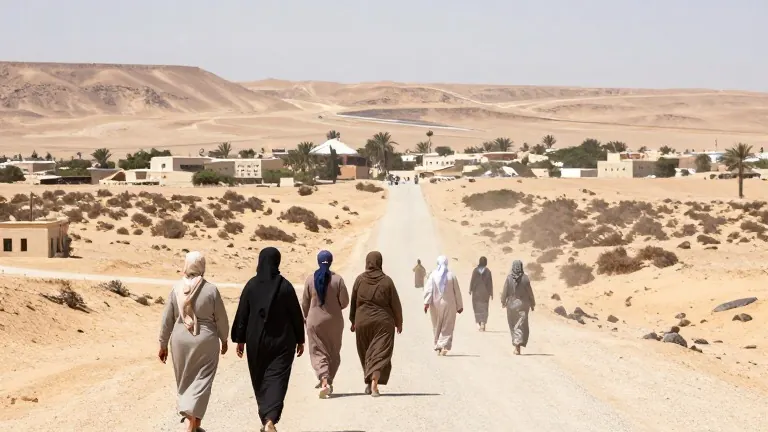
Bedouin women who organised rides, explained voting rights and stood at polling stations helped triple turnout in some southern Negev villages during Tuesday's Israeli election. The campaign targeted National Security Minister Itamar Ben-Gvir, who ordered home demolitions in Arab communities. Umm Khaled Fatoum, whose son's house in Azzarnug was torn down last year under police escort before the family could remove furniture or solar panels, said her goal at the ballot box was to "send [Itamar] Ben-Gvir home."
Hanan Alsanah, a lawyer who leads the Alnashmiat network, said the programme worked because "even if all the men go to vote, it is only half the community. You need the power of all your votes, because Ben-Gvir has a lot of power." Turnout in Bedouin communities ranged from a low of 62% to more than 93%, with an estimated 180,000 eligible voters. The rise in participation among Arab citizens of Israel helped Palestinian-led parties win 19 Knesset seats and stripped Benjamin Netanyahu and his allies of a governing majority.
Bedouin women turned out despite barriers that kept many from the polls. Unrecognised villages have no polling stations, so voters travelled to nearby towns, with men going by camel, horse, donkey or bike on trips of up to an hour each way. Jewish women offered lifts to Bedouin women, but a 2019 election committee ruling made organising transport volunteers illegal, so drivers and voters connected one to one. Raluca Ganea, founding executive director of the Jewish-Arab group Zazim, said hundreds of women volunteers helped Bedouin women reach polls while about 150 men provided protective presence at polling stations to de-escalate any rightwing provocation.
Mayada Abu Khweida said organisers told women in unrecognised villages that they could vote in national elections even though they cannot vote in municipal races. "We told them: 'There is a legal way to express your anger and raise your voice,'" Abu Khweida said. Women also covered their faces at polling stations to avoid being photographed for Ben-Gvir's social media feed, which Alsanah said features humiliation of Arab citizens. In recognised towns, where women voted within their own communities, most did not cover their faces, Alsanah said.
Alsanah reported that informal data shows more than 60% turnout among women in unrecognised villages, compared with about 20% in the 2022 election. Israel does not break down voting statistics by gender, she said. Unrecognised villages lack electricity, water supplies, bomb shelters and warning sirens before rocket, drone and missile attacks. More than 100,000 people live in about 30 such communities in the Negev; another 200,000 live in official towns or places with some recognition. Organised crime has risen under the current government, and rockets that hit Bedouin villages without shelters killed six of the 36 child victims of the 7 October attacks.
Netanyahu accused Palestinian-led parties of fraud and foreign support after the election. Amit Segal, a pundit and close confidant of the prime minister, said the increase in turnout among Bedouin and Arab voters "is unprecedented in the history of the state." Opposition leaders, election organisers and Negev activists rejected the allegations. Amira Habdoubi, an organiser from Abu Talul, said: "I am very proud of our turnout. They are talking about 'corruption' [as the reason for high voter turnout]. The correct word is 'awareness'."
Alsanah said the campaign built on more than a decade of work through Alnashmiat and could set an example for a new government. "We learned an important lesson from this election campaign. We should work together, men and women, Arab and Jewish citizens, and we should bring this approach to the Israeli parliament to rebuild the state," she said.
Ra'am, the Islamist party, beat polling expectations on Tuesday. Alsanah reported more than 60% turnout among women in unrecognised villages.