Supreme Court Lifts Big Bend Wall Injunction
The high court ruled that a federal immigration law permits the suspension of environmental reviews, allowing construction to resume in West Texas.
By Ricardo Alvarez ·
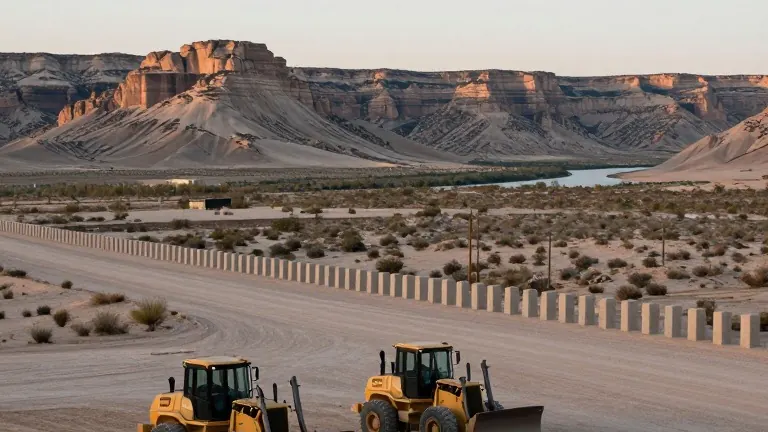
The Supreme Court allowed the construction of a 30-foot border wall to resume in the Big Bend sector of Texas on Monday. The high court lifted a lower court order that had temporarily halted the project and related infrastructure work. This sector covers more than 500 miles of the southern border and includes Big Bend National Park.
In an unsigned five-page decision, the justices stated that the district court's injunction impeded the government from advancing its compelling interests in border security. The court noted that Congress enacted immigration laws permitting the Secretary of Homeland Security to waive requirements for environmental protection and other conservation laws. The ruling emphasized that this legislative choice reflects a clear preference for expeditious border construction over the specific harms cited by the plaintiffs.
Justice Ketanji Brown Jackson dissented from the majority's decision. She stated that she would have denied the Justice Department's request for emergency relief. The decision allows the Trump administration to proceed with building bollard walls and patrol roads while the underlying litigation continues.
The Center for Biological Diversity, a plaintiff in the case, criticized the ruling. Laiken Jordahl, the group's national public lands advocate, said the decision gave contractors the green light to bulldoze pristine desert and dynamite canyon walls. Jordahl argued that the move threatens the permanent destruction of the wildest place in Texas and the theft of a great American river.
Solicitor General D. John Sauer argued that stopping construction would create a massive vulnerability in border protection. He warned that the halt risks funneling illegal entry and trafficking into the unsecured Big Bend Sector. The government also cited irreversible delays and costs associated with halting already-begun construction.
The plaintiffs, which include an environmental nonprofit, a professional riverboat guide, and a religious organization, argued that the project would permanently alter an irreplaceable landscape. They noted that the area includes Big Bend National Park, Big Bend Ranch State Park, and nearly 200 miles of the Rio Grande Wild and Scenic River corridor. Their lawyers stated that no final judgment can restore the status quo once habitat and historic resources are damaged.
The Department of Homeland Security issued three waivers for project areas in the Big Bend region starting in February. These waivers were issued under a 1996 federal immigration law that allows the secretary to waive legal requirements necessary for expeditious construction. The department used this authority to bypass typical federal environmental and historical preservation compliance checks.
District Judge Kathleen Cardone previously granted a preliminary injunction that barred the administration from engaging in any construction or ground-disturbing activities in the sector. She found that the Secretary of Homeland Security exceeded his authority when issuing the waivers. The administration and challengers disputed whether the area qualifies as a zone of high illegal entry.
The government argued that immigration officers apprehended more than 89,000 people trying to cross into the U.S. illegally in the Big Bend area between 2021 and 2025. The plaintiffs countered that the sector ranks last for apprehensions compared to other southern border sectors. They noted that annual apprehensions in the region ranged between 0.3% and 2.2% of total border-wide numbers despite the sector covering more than 25% of the border.
Construction of a 47-mile-long stretch of wall in Hudspeth County began in September. Customs and Border Protection Commissioner Rodney Scott previously announced that wall construction would pause until the end of September following public backlash. Scott stated that the proposed 30-foot wall will not cut through Big Bend National Park, but more than 200 miles of patrol roads and roughly 17 miles of a vehicle-barrier system will.