
Miscanthus: A 12-Foot Grass Gains Traction as a Profitable Crop
The perennial grass offers farmers a reliable income stream with lower input costs, though it requires a multi-year investment before the first harvest.
By Harvey Wilson ·
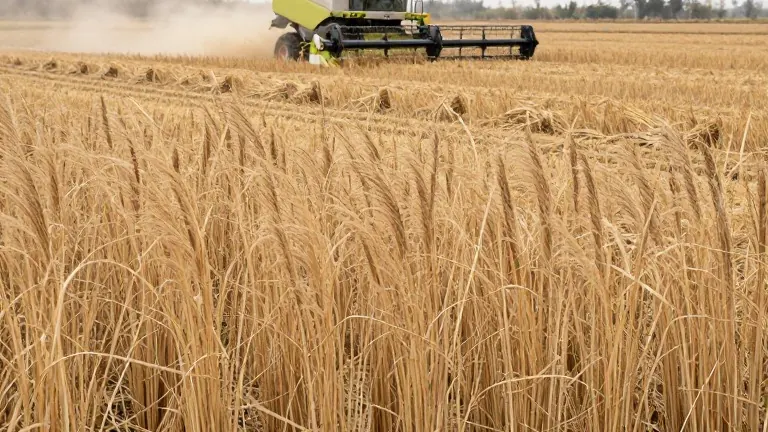
Farmers in east central Illinois are turning to a twelve-foot perennial grass to stabilize income and reduce operating costs. Miscanthus, a tall grass that grows back annually without replanting, requires no herbicides or pesticides once established. It is harvested in late February or early March, a period that does not conflict with the peak workload for corn and soybean production.
Eric Rund, a farmer in east central Illinois, converted forty acres of underperforming corn land to miscanthus nearly twenty years ago. He sells the dried grass directly to turkey farmers for use as bedding. Rund stated that in the last four years, miscanthus has been his most profitable crop. The material can also be burned for heat and power or processed into building materials.
A first international summit on the crop was held in Illinois in October, bringing together researchers, farmers, and policymakers. Emily Heaton, a crop sciences professor at the University of Illinois Urbana-Champaign, organized the event to build economic infrastructure for the grass. She noted that over 20,000 acres of miscanthus are currently grown in the United States, with significant expansion occurring on the eastern shore of Maryland for poultry bedding.
Heaton described giant miscanthus as a naturally occurring hybrid that does not reproduce on its own, preventing it from becoming invasive. The plant spreads only about one foot from its original location. Its deep root system improves soil health and prevents erosion, while its dense growth provides natural weed control by shading out competitors.
The grass produces more biomass per acre than switchgrass, another perennial used for energy. Heaton said switchgrass yields are typically about 60% of what miscanthus produces. Researchers at the University of Illinois have studied the crop for more than twenty years and are developing gene editing techniques to create new varieties.
Andy VanLoocke, an agronomy professor at Iowa State University, found that miscanthus is a reliable crop in terms of yield consistency. Unlike corn and soybeans, which suffer immediate yield losses during drought, miscanthus maintains production in the first year of a dry spell. However, yield impacts may appear in the following one or two years.
Katarzyna Glowacka, a biochemistry professor at the University of Nebraska-Lincoln, is studying the grass's tolerance to cold temperatures. She aims to identify the mechanism that allows the plant to survive low temperatures, which could help develop cold-tolerant varieties of corn. A larger, cold-tolerant miscanthus variety would allow farmers to plant earlier in the season, increasing total biomass.
Adopting the crop requires a financial commitment. Miscanthus must grow for two to three years before it can be harvested. Toby Kellogg of the Donald Danforth Plant Science Center noted that farmers must take land out of production during this period, which affects cash flow. Illinois State Sen. Paul Faraci argued that the financial risk should be shared between farmers, the government, and industry partners to encourage adoption.
More Business · Consumer Alerts · Report a business · Got a Story?