
Ghana cuts mortgage rates but affordability gap persists
New financial measures aim to ease homebuying costs, yet developers cite land and import hurdles that keep housing prices high.
By Zoe Harrison ·
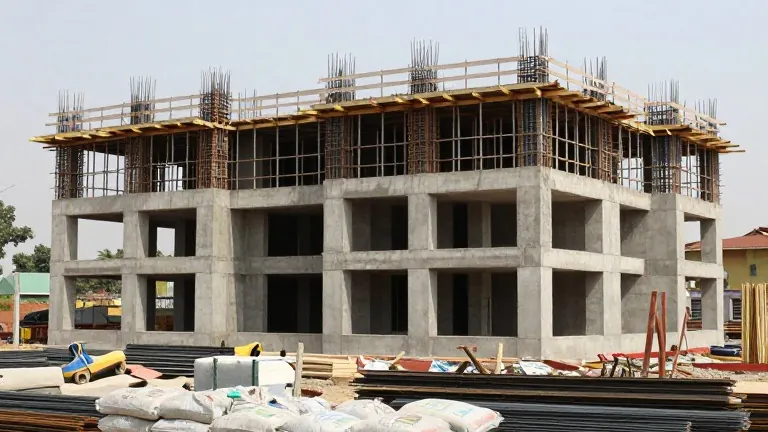
Accra, Ghana. The National Homeownership Fund has reduced mortgage rates to 8.4 percent, down from 13.5 percent, in an effort to stimulate construction and improve access to housing. This adjustment was part of a broader package of measures discussed at the Africa Real Estate Conference & Expo (ARCE) held in Accra this week. The event gathered developers, policymakers, and investors to address the country's housing deficit, which stands at more than 1.8 million units.
Despite these financial interventions, experts argue that lower borrowing costs alone cannot close the affordability gap. Approximately 56.7 percent of Ghana's population resides in urban areas, yet only about 5 percent of residents can afford housing without state assistance. The disconnect between supply and purchasing power remains a central issue for both private developers and conventional lenders.
President John Dramani Mahama announced an allocation of one billion Ghanaian cedis, roughly $85 million, for the National Housing Fund in the 2027 budget. He emphasized that informal sector workers are often excluded from mortgages due to a lack of payslips and banking records. Mahama urged banks to develop alternative methods for assessing borrower creditworthiness.
Housing Minister Ahmed Ibrahim, who represented the president at ARCE, called for increased private sector participation in affordable housing. The government is also reviving the Saglemi Housing Project, targeting the completion of the first 700 units by March 2027. Additionally, plans are underway for a 200-acre Green City Project at Dedesua.
Developers face substantial hurdles beyond interest rates. Samuel Amegayibor, executive director of the Ghana Real Estate Developers Association (GREDA), identified access to finance and secure land as primary obstacles. Borrowing costs have decreased from around 30 percent to between 9 and 15 percent, but land ownership complications and inadequate infrastructure continue to add uncertainty and expense.
Amegayibor noted that approximately 70 percent of housing inputs are imported. This reliance exposes developers to fluctuating import costs and taxes. He suggested that expanding local production could reduce these dependencies and create investment opportunities across the construction supply chain.
For tenants, immediate financial barriers often precede monthly rent. Although the Rent Act of 1963 limits advance rent to six months, landlords routinely demand one to two years upfront. Government enforcement measures introduced in April 2026 impose penalties of up to 3,000 cedis or six months' imprisonment for non-compliance. A proposed Easy Rent programme would allow the National Housing Fund to pay rent advances directly to landlords, with workers repaying the amounts monthly.
Technology offers potential solutions for reducing operating costs. Isaac Ayitey Chris-Quaye, co-founder of NeuraHomes, stated that smart-home systems can lower energy expenses. His company allows homeowners to introduce features gradually. In one case, property managers reduced annual energy costs by 20 percent, with the system paying for itself within four years.
William Atitso Amankwah, founder of AWA Roofing Sheets, developed a Cool Roof coating that reflects up to 60 percent of sunlight. He estimates this can lower indoor temperatures by 2 to 5 degrees Celsius and reduce cooling energy consumption by 11 to 27 percent. For a typical household in Greater Accra, this translates to annual savings of 330 to 810 cedis.
Bako Ambianda, CEO of Backbone Capital Ventures, argued that the housing challenge is a mismatch between delivery costs, available financing, and household payment patterns. He recommended that lenders assess repayment capacity using mobile-money activity and rental-payment records rather than relying solely on traditional salary slips. AMBIANDA also called for a National Housing Authority led by technocrats to ensure policy consistency beyond political cycles.
More Business · Consumer Alerts · Report a business · Got a Story?