Ukrainian Human Rights Chief Plans New Center for Detained Civilians
Over 3,000 Ukrainian citizens remain in Russian deportation facilities due to missing travel documents and a lack of a dedicated repatriation agency in Kyiv.
By Harvey Wilson ·
Ukrainian Commissioner for Human Rights Dmytro Lubinets announced that his office is working to establish a Centre for the Return of Civilians. The new body aims to coordinate the release of Ukrainian citizens held in Russian detention centers, a gap in institutional support that has left thousands of individuals in legal limbo for years. Lubinets stated that the initiative is modeled after the existing Child Rights Protection Centre and is intended to streamline repatriation and advocacy efforts.
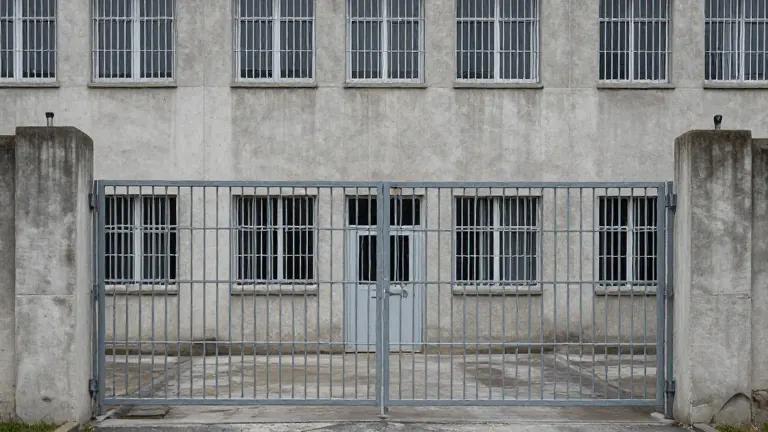
More than 3,000 Ukrainian citizens are currently held in Russian deportation centers, which function as migrant prisons. Aliona Lunova, Advocacy Director at the ZMINA Human Rights Centre, explained that these facilities detain various groups, including former political prisoners who have completed their sentences. Once released from prison, these individuals are often reclassified as migration offenders, preventing their immediate release. A primary obstacle is the inability to renew travel documents, as Ukrainian diplomatic missions have not operated within Russia since 2022.
Kostiantyn Davydenko, a former political prisoner, described the current process as contradictory. While Russian authorities issue deportation orders for these citizens, an unofficial policy prevents their actual return to Ukraine. Russian officials justify the delay by citing the ongoing special military operation and the closed border with Ukraine. This rationale allows the state to keep detainees indefinitely without formally executing the deportation orders.
Ukraine has not yet established a consistent method for issuing return certificates or appointing a protecting power to provide consular services in Russia. Lunova noted that there is currently no single agency in Ukraine dedicated to securing the release of civilians from these centers. Some exchanges have occurred through agreements between human rights commissioners, but the process remains ad hoc.
Precise data on the number of Ukrainians in these facilities is scarce. Davydenko predicts that the population of the centers will grow in the coming years as the prison terms of many unlawfully detained individuals near completion. Dmytro Lubinets said Ukraine is seeking mediation from Estonia and Lithuania to facilitate the return of its citizens. He acknowledged the need for a specialized body to handle these cases, a necessity demonstrated by the recent humanitarian operation in Oleshky.
The bureaucratic delay has a profound personal impact, as illustrated by the case of Valentyn Vyhivskyi. The 43-year-old was lured to Crimea in 2014 and accused of espionage, becoming one of the first unlawful prisoners under the Kremlin. He was sentenced to 11 years in prison and subsequently placed in a migrant prison. When Vyhivskyi was captured, his son had not yet started school. The child is now a first-year university student. Vyhivskyi stated that his primary desire is to see his son again.