
Pie Baking Costs Rise with Specialty Tools
Holiday cooks face a choice between basic kitchen items and specialized equipment ranging from 7-inch mini pins to 4-quart stand mixers.
By Tessa Cooper ·
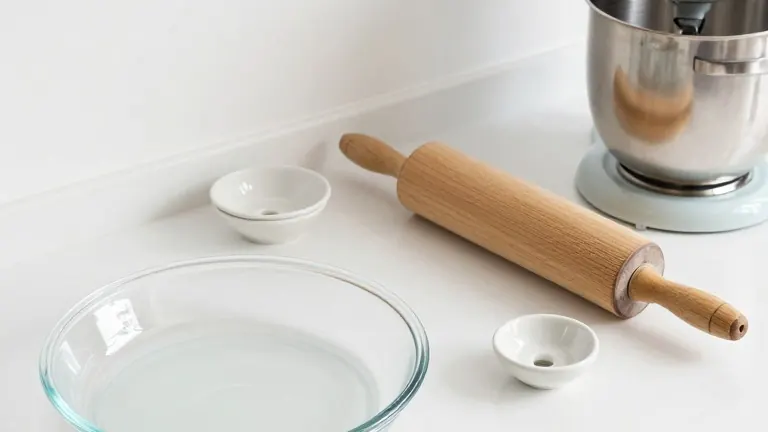
Holiday bakers in Suffolk County face a growing gap between the labor of pie making and the cost of the tools required to manage that labor. While the traditional process involves rolling dough by hand and using simple utensils, the market now offers specialized accessories designed to reduce physical strain and standardize results. These items range from inexpensive basic tools to high-end electrical appliances, creating a tiered market for home cooks preparing for the season.
The core of the equipment market centers on three categories: pie plates, rolling pins, and stand mixers. A four-pack of 9-inch glass plates made in the United States offers a baseline option, featuring freezer and dishwasher safety. A 10-inch ceramic dish with a teal exterior requires handwashing but provides a presentable finish. For those needing variety, a set of four plates covers diameters from 7 to 10 inches, with dimpled edges and integrated handles for handling.
Rolling pins represent a specific area of product differentiation. A single tool offers four distinct edge thicknesses: one-sixteenth, one-eighth, one-quarter, and three-eighths of an inch. This design allows for precise dough thickness without visual estimation. In contrast, a set of six mini rolling pins measures 7.7 inches from tip to tip, a size intended for children. A traditional 17.5-inch pin features a 10-inch rolling center and rustproof nylon bearings to reduce friction. A tapered French-style pin requires practice to use effectively but is marketed as a tool for ease of use after the learning curve is overcome.
Stand mixers, while not strictly necessary for pie making, are positioned as time-saving investments. A model with a 4-quart mixing bowl includes a whisk, dough hook, and mixing paddle, offering sufficient capacity for multiple pies. Another option includes a combination splash guard and pour spout, along with a chef’s whisk and flat paddle. A third mixer comes with two beaters, two dough hooks, a recipe book, and access to a digital recipe database. Color options vary across the category, with specific models available in five, seven, or nine shades.
For recipes requiring a blind baked crust, pie weights serve as a functional accessory. A single-piece weight shaped like a pie crust features rubber edges that bend to fit 9 to 11-inch plates. Alternative options include a box of 10-millimeter ceramic marbles that total 1.2 pounds and withstand temperatures up to 480 degrees. A glass weight sack weighs 2.5 pounds and resists oil and odor absorption better than ceramic alternatives. A chain-style weight is sold in lengths of 6, 10, and 15 feet.
Basic kitchen items remain part of the necessary toolkit. Spoons for mixing, forks for venting crusts, and knives for trimming dough are standard requirements. Pots, pans, and bowls for filling preparation are also listed as essential. These items are typically already present in a home kitchen, reducing the incremental cost of the holiday baking process compared to purchasing new specialized equipment.
Prices for these items reflect the current market and are subject to change. The availability of these tools allows home bakers to select a level of automation and precision that matches their skill set and budget. The market offers solutions for both the first-time baker using simple glass plates and the experienced cook utilizing a stand mixer with a 4-quart bowl.
More Business · Consumer Alerts · Report a business · Got a Story?