
Lake Powell rises 12 feet after storms, but still sits at 25% capacity
Rain in the Phoenix metro area boosted local reservoir levels, yet experts warn that desert precipitation does not replace the Rocky Mountain snowpack needed to sustain the Colorado River system.
By Ricardo Alvarez ·
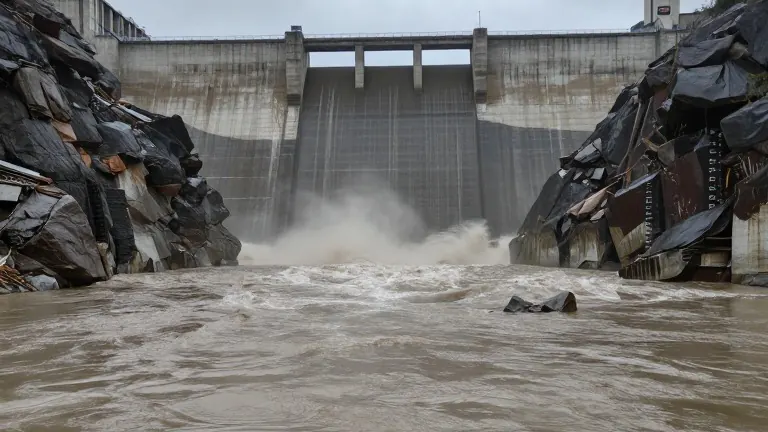
Rainstorms across the Phoenix valley raised water levels in Arizona's largest reservoirs this month, providing temporary relief following a dry summer. The influx of water offered a short-term boost to local supplies, though regional experts caution that the increase does not solve the long-term deficits facing the state.
Lake Powell, which supplies water to much of the Southwest, gained 12 feet in two weeks following the storms, according to Sarah Porter, director of Arizona State University’s Kyl Center for Water Policy. Despite the rapid rise, the reservoir currently holds approximately 25% of its total capacity. Porter noted that while the additional water is helpful, it is insufficient to resolve the ongoing crisis.
“It’s water. It helps. Is it enough to solve the Colorado River crisis? No,” Porter said. “It isn’t enough for us to sort of celebrate and take the rest of the year off because Lake Powell is still at a very low level with it being it’s currently at about 25% full.”
Downstream, Lake Mead, the nation’s second-largest reservoir, remains at approximately 23% capacity after the recent weather system passed through. The downpours also caused destructive flooding in several rural Arizona communities, a trade-off that underscores the volatility of desert weather patterns.
Porter emphasized that rain falling in the Phoenix metropolitan area does not feed the critical headwaters of the Colorado River. More than 80% of flows in the system originate from snowpack in the upper Rocky Mountains of Colorado, Wyoming, and Utah. “We love rain, but what we really need is snow pack in the upper Rockies,” she said.