Scottish bog leg reshapes Roman history
New evidence suggests an 1820 bronze find belonged to a statue of Emperor Antoninus Pius, challenging decades of archaeological consensus.
By Ricardo Alvarez ·
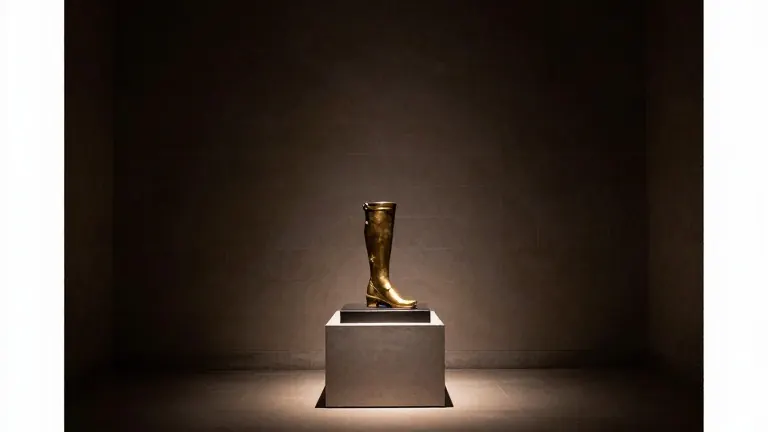
A gilded bronze leg recovered from a Scottish bog in 1820 appears to have belonged to a large equestrian statue of Emperor Antoninus Pius, according to new research presented this week. The finding suggests the fragment was created near Hawick after Roman armies secured control of southern Scotland around AD 140. This interpretation replaces a long-held theory that the object was plunder brought north by Scottish tribes.
The artifact, known as the Mislington leg, was previously thought to have been cut from a statue in York. It remained in the charter room at Dalkeith House near Edinburgh for a century after its discovery. The property belongs to the Duke of Buccleuch. Recent comparisons with imperial statues found along other Roman frontiers now support a local origin for the piece.
The leg serves as the centerpiece for the exhibition Roman Scotland: Life on the Edge of Empire, which opens at the National Museum of Scotland in Edinburgh on Saturday. Curators describe it as the largest exhibition dedicated to the Romans in Scotland. The display includes items intended to demonstrate the reach of Roman occupation and its lasting political and cultural effects.
Principal curator Dr. Fraser Hunter states that the leg was deliberately detached and deposited rather than violently hacked away. He estimates this occurred approximately 1,700 years before the 1820 discovery. Hunter argues that such monumental statues would have made a striking impression on Iron Age communities, whose art rarely portrayed people in a naturalistic style.
The exhibition also features a reconstructed earthenware bowl from Inveresk, located east of Edinburgh. Assistant curator Bethany Simpson noted that the bowl’s decoration of dolphins, stags, and a hunting dog is unique to the site, with no equivalent found elsewhere in the UK. Inveresk housed a substantial Roman fort and town during the Antonine occupation of AD 142 to 165.
Hunter estimates that southern and eastern Scotland held about 10,000 soldiers during this period, including auxiliaries from regions now known as Romania and North Africa. He suggests another 10,000 camp followers, including wives and enslaved people, lived in the area. Two well-preserved stone altars from a temple of Mithras at Inveresk are also on display for the first time.
One hollowed altar features openings around the carved head of Mithras, including holes in the eyes and mouth, through which lamplight could shine. A complete horse skeleton from a careful burial at the site is another exhibit. Hunter said such treatment of cavalry horses was unusual in Britain and suggested the animal was particularly valued.