Library use surges as Americans cut discretionary spending
Cardholder membership and digital checkouts have risen sharply at major systems, even as federal funding for the sector faces new threats.
By Ricardo Alvarez ·
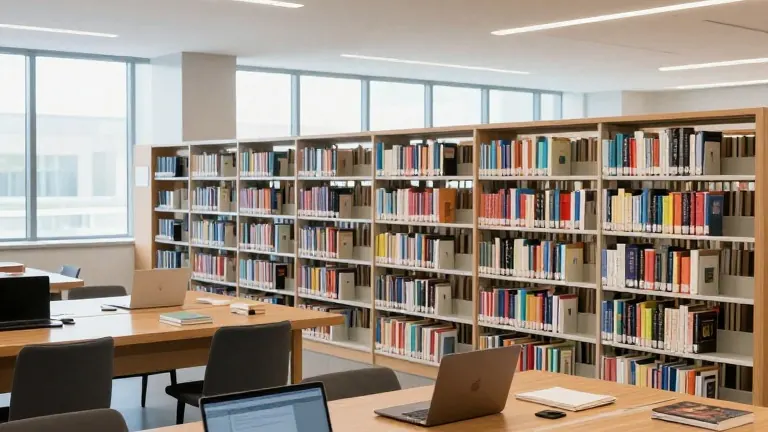
Americans are trading paid subscriptions and coffee shop visits for free library resources as the cost of living rises. A Pew Research Center survey released in mid-October found that 44% of adults struggled to afford basic necessities over the past year. Seventy percent of those surveyed said they reduced spending on extras, such as streaming services. This financial pressure is driving a measurable shift toward public library services.
Data from major public library systems confirms the trend. The Los Angeles Public Library reported a 37% increase in makerspace usage and over 20% growth in digital circulation and in-person visits over the last two fiscal years. The Chicago Public Library saw in-person visits, adult card applications, and Wi-Fi sessions jump by more than 11% from January through July. In Arizona, the Maricopa County Library District recorded a 34% increase in Kanopy use and a 78% surge in Hoopla use over three years. OverDrive, the owner of Kanopy, reported a 41% spike in users last year alone.
Librarians attribute the rise partly to a historical pattern where library use increases during economic downturns. An American Library Association analysis found circulation rose at 18 large systems during the 2001 recession. Another study of 541 libraries showed higher use during the Great Recession. However, the current boom is also fueled by better marketing and social media interest in reading. Jeremy Reeder, director of the Maricopa County Library District, noted that patrons are discovering they can access paid content like Audible titles for free with a library card.
The growing reliance on libraries occurs while federal support remains uncertain. The Trump administration attempted to eliminate the Institute of Museum and Library Services last year. Twenty-one state attorneys general sued to block the move, leading the administration to reinstate the grants. However, the White House budget proposal released in April recommended zeroing out funding for the agency for the current fiscal year. Maria McCauley, president of the American Library Association and director of the Cambridge Public Library in Massachusetts, said the uncertainty makes it harder to secure necessary resources.
Libraries are also expanding their role beyond books to address immediate community needs. A survey found that 56% of libraries offered food security support services last year, a period when millions of Americans lost Supplemental Nutrition Assistance Program benefits. Many branches now lend out a "library of things," including Wi-Fi hotspots, induction cooktops, and camping gear. At the Free Library of Philadelphia, attendees use provided sewing machines for no cost to make costumes or crafts. Patrons like Nathaniel Muns, a recent college graduate, use the facilities to practice music and decompress, citing the rising cost of maintaining personal instruments and hobbies.
Local systems are seeing mixed results in specific areas. The Topeka and Shawnee County Public Library, where resident Izzy Rivera borrows books, logged an 8.1% increase in digital media checkouts last year. Physical circulation at that location has declined, though requests for tech support, such as help with online job applications, have surged. Rivera, who is saving for law school, uses the library for physical books, digital copies, and free access to the New York Times to avoid the expense of buying new materials.