Delhi Air Quality: Winter Smog Returns With PM2.5 Levels Far Above Safety Limits
Local emissions and regional transport drive the crisis as officials debate the role of crop burning versus industrial activity.
By Zoe Harrison ·
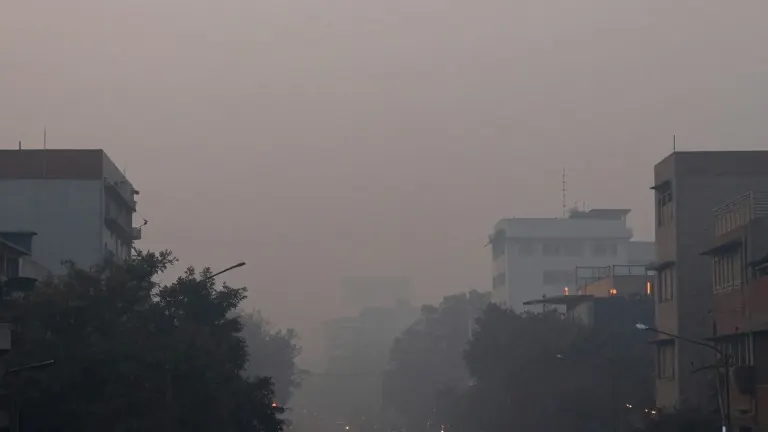
Delhi's air quality has entered the "Very unhealthy" category, with average PM2.5 concentrations reaching 157.9 micrograms per cubic meter on Thursday. The World Health Organization recommends an annual safe limit of no more than 5 micrograms per cubic meter. This data comes from Swiss air quality monitor IQAir and confirms a familiar winter pattern in India's capital.
Residents are adjusting their daily routines to cope with the particulate matter. Khushboo Arora, a Delhi resident, stopped yoga in parks and morning walks due to recurring headaches and dry throats. She has installed air purifiers and sprays water mist inside her home to lower pollution levels. Arora noted that her parents view these measures with skepticism, yet she argues that many people have not grasped the severity of the situation.
Sunil Dahiya, founder of the environmental group EnviroCatalysts, points to a lack of regional coordination as a primary failure. Dahiya cited government Decision Support System data for winter 2025, which found that approximately 65% of Delhi's PM2.5 originated from outside the city limits. Neighboring areas in the National Capital Region, including Noida and Gurugram, are major contributors to this imported pollution.
Sources within Delhi also play a substantial role. Dahiya stated that vehicles account for roughly 51% to 53% of local PM2.5. Secondary particulates form from gases like sulfur dioxide and nitrogen oxides emitted by power plants, industry, and transport. He emphasized that stopping crop burning in neighboring states would not solve the problem entirely, as Delhi would still face unhealthy air for most of the year.
Delhi Environment Minister Manjinder Singh Sirsa attributed rising pollution levels to stubble-burning in Punjab. Speaking to public broadcaster All India Radio on Thursday, Sirsa insisted that construction, vehicle, and industrial sources within Delhi were under control. He identified the agricultural fires in the neighboring state as a key factor in the current deterioration.
Bhavreen Kandhari, co-founder of Warrior Moms, criticized the government's reactive approach. She stated that officials allow pollution to occur before attempting cleanup, often using water sprinklers and smog towers for photo opportunities. Kandhari argued that incinerating waste instead of managing it properly has worsened the air quality and that spending on cleanup is a waste of public funds and health.
Deepika, a domestic worker in South Delhi, has been coughing for a week and described the situation as a yearly occurrence. She said she has no choice but to endure the toxic air for the coming months. Namrata Yadav, a mother who joined anti-pollution protests a year ago, said the problems persist despite public demands for clean air. She called for science-driven solutions and accountability rather than repeated emergency plans.